
Porcelain Veneers: Are They Right for You?
Porcelain Veneers: Are They Right for You?
A chipped edge, a stubborn stain, or a gap that’s bothered you for years can all be addressed without reshaping your entire smile, and that’s exactly where porcelain veneers are used. At Fremont Family Dentistry, we offer porcelain veneers in Fremont, IN, to patients who want a natural-looking upgrade without committing to invasive procedures. Whether veneers are the right fit depends on a handful of factors specific to your teeth and goals, and we’ll walk through them here.
What Are Porcelain Veneers?
Porcelain veneers are thin, custom-made shells bonded to the front surface of your teeth to improve their color, shape, size, or alignment. Unlike a crown, which covers the entire tooth, a veneer only covers the visible front surface, which means less of your natural tooth structure needs to be altered. Porcelain is prized for cosmetic dental treatments because it mimics the translucency of natural enamel, giving veneers a realistic look.
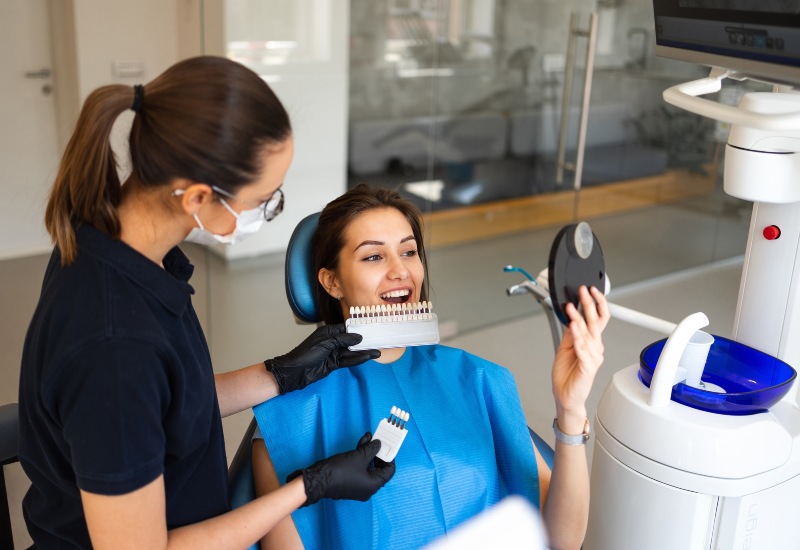
How Porcelain Cosmetic Veneers Work
Once bonded in place, porcelain veneers function as a permanent cosmetic layer over your existing tooth. A small amount of enamel is typically removed beforehand to make room for the veneer and ensure it sits flush with your gumline and neighboring teeth. The porcelain shell is then custom-fabricated to match your desired shade and shape before being cemented onto the tooth. Once in place, the veneer becomes a durable extension of your smile.
Who Is a Good Candidate for Veneers?
Good candidates for veneers generally have healthy teeth and gums, since the procedure relies on a stable foundation. Veneers work particularly well for patients dealing with staining that doesn’t respond to whitening, minor chips, gaps between teeth, or slightly uneven tooth shapes.
If you’re wondering, “Are porcelain veneers right for me?” a few factors matter most: your gum health, whether you grind your teeth at night, and your willingness to commit to a procedure that’s not reversible. Patients with active decay, significant grinding habits, or insufficient enamel may be better suited to a different restoration.
The Porcelain Veneer Procedure: Step-by-Step
The process starts with a consultation where we evaluate your teeth, discuss your goals, and determine your desired shade and shape. We remove a small amount of enamel from the teeth receiving veneers to create space for a natural fit. Impressions are taken and sent to a dental lab, where your custom porcelain veneers are crafted, a process that usually takes about two weeks. During a second visit, the veneers are checked for fit and color match, then permanently bonded into place. The entire process is generally painless and doesn’t require anesthesia for most patients.
Benefits of Porcelain Cosmetic Veneers
The benefits of getting dental veneers go beyond a brighter smile. Porcelain resists staining far better than natural enamel, so coffee and tea drinkers don’t have to worry as much about discoloration. Veneers can correct multiple cosmetic concerns at once, addressing color, shape, and minor alignment issues in a single treatment rather than several separate procedures. They also require less tooth alteration than crowns, preserving more of your natural structure while still delivering a dramatic improvement. For patients considering a full smile makeover with veneers, the ability to standardize the color and shape across several teeth at once is one of the biggest draws.
Porcelain Veneers vs Other Cosmetic Dental Treatments
When comparing veneers vs crowns, the biggest difference is how much of the tooth is involved. Crowns cover the entire tooth and are typically reserved for teeth with significant structural damage, while veneers only address the front surface and suit teeth that are structurally sound but cosmetically imperfect.
Compared to teeth whitening, veneers offer a more permanent solution and can correct shape and alignment issues that whitening can’t touch. Composite resin veneers cost less and can be completed in a single visit, but typically last four to eight years compared to the 10 to 15 years porcelain veneers can provide with proper care.
Caring for Your Porcelain Veneers
Veneers don’t require dramatically different care than your natural teeth, but a few habits help them last. Brushing twice daily and flossing regularly protects both the veneer and the gum tissue supporting it. Avoiding using your teeth to open packages or bite down on hard objects reduces the risk of chipping. If you grind your teeth at night, wearing a nightguard protects your investment. Routine dental visits also help us catch early signs of wear or loosening before they become bigger problems.
Common Myths About Porcelain Veneers
One common myth is that veneers look fake or overly perfect, but modern porcelain is designed to mimic natural translucency and can be shaped to complement your existing smile. Another misconception is that veneers ruin your natural teeth, but when placed correctly, the remaining tooth structure stays protected by the veneer itself. Some patients also believe veneers require extensive daily maintenance, when in practice, regular brushing and flossing are typically enough. Finally, many assume veneers fix every dental issue, but they’re a cosmetic solution and aren’t meant to replace treatment for decay, gum disease, or misaligned bites.
Frequently Asked Questions
How long do porcelain veneers last?
With good care, porcelain veneers typically last 10 to 15 years before needing replacement.
Are veneers good for chipped teeth?
Yes. Veneers for chipped teeth are one of the most common uses, covering the damaged area while restoring a natural, even appearance.
Do veneers require special maintenance?
Not dramatically. Regular brushing, flossing, and avoiding hard foods or teeth grinding without a nightguard are usually enough to protect them.
Is getting veneers painful?
Most patients report little to no discomfort, since anesthesia typically isn’t needed and the enamel removal is minimal.
Find Out if Porcelain Veneers Are Right for You
The best way to know whether porcelain veneers fit your smile goals is a conversation with Fremont Family Dentistry. We will explain your options, answer your questions about cost and process, and help you decide whether porcelain or composite resin veneers make more sense for you. Reach out to schedule a cosmetic consultation and start planning your smile makeover.